
9/18/26
Dear Ones of Christ Church,
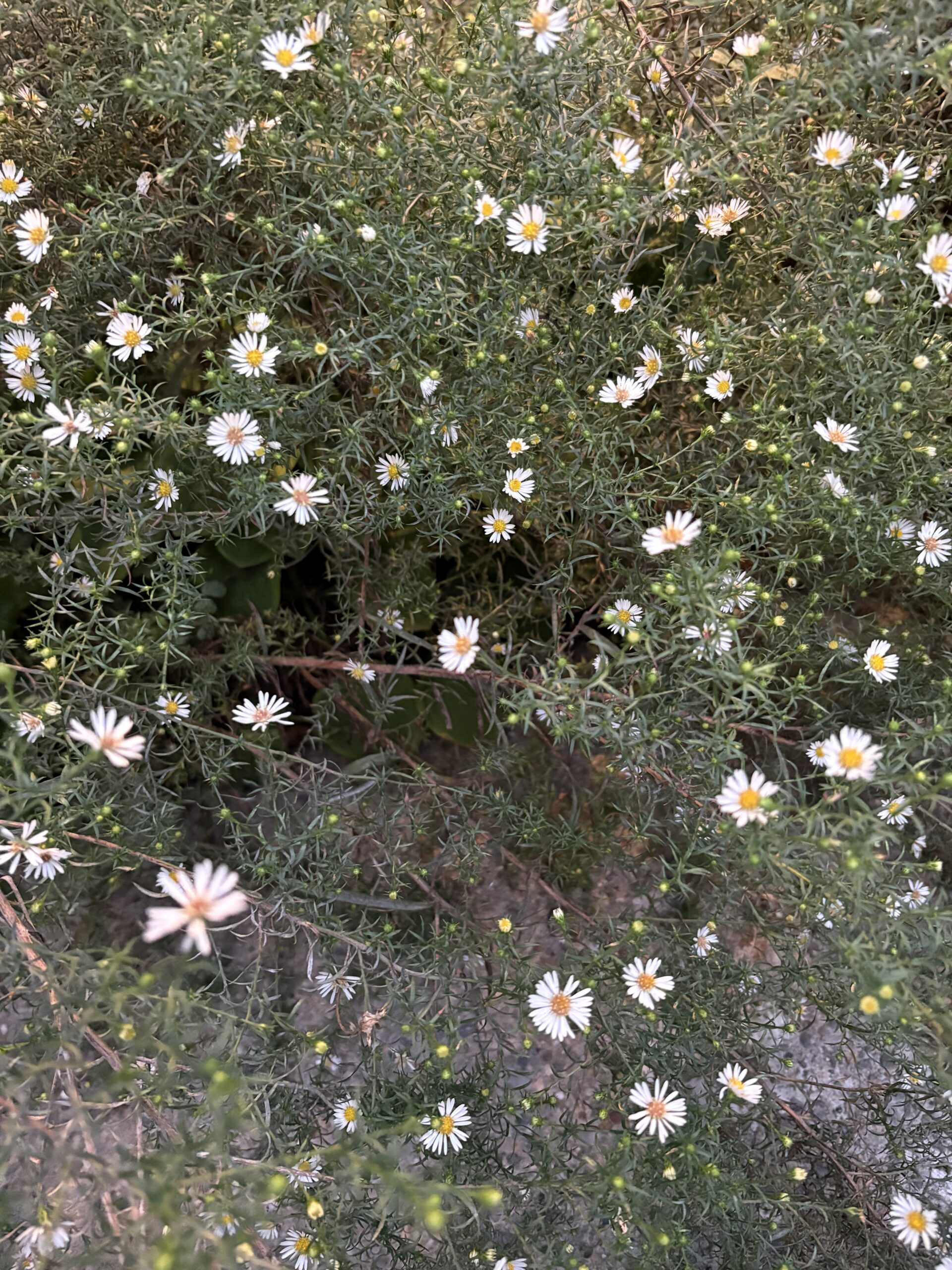
The photo above shows a riot of budding and blooming asters in our garden. Their growth pattern reminds me of the ways that God’s work is sometimes slow and patient, and at other times sudden and urgent—the stalks and branches of asters grow all summer, and then their tiny blooms finally burst open in September, reminding me of a universe of stars! Asters are important native plants because they bloom late in the season and provide nectar for pollinators into the autumn months. Asters and goldenrod love to grow together in gardens! What feels slowly growing in your life with God this season? What feels sudden and urgent?
Read on for a few practical notes:
I am headed out for a week of vacation, and so here is our worship schedule this weekend:
- Saturday 5p - Holy Eucharist with the Rev. Daphne Burt celebrating and preaching
- Sunday 8a and 10a - Morning prayer/Matins with the Rev. Deacon James Thomas officiating and preaching
I look forward to being back with you all the weekend of 9/26 and 9/27, when we will pray the Stations of Creation together during our worship services!
In the coming days, please keep an eye out in the post for letters and information about our parish pledge campaign. I am excited about the campaign’s theme this year, Plenty Good Room—Jesus is always teaching us and calling us to make more space, more room, for all at his table and in his community of disciples. In this newsletter reflection space, starting next week and throughout the fall, Christ Church parishioners will share their reflections about Plenty Good Room and the spiritual practice of pledging financial support, volunteer support, and prayer and presence support to our church. I look forward to reading and praying with your reflections and with the theme of Plenty Good Room.
Yours in Christ,
Melissa+
9/11/26
Dear Ones of Christ Church,
Last weekend in my sermon about loving all of our neighbors, I mentioned the work of Dr. Doug Tallamy and his team’s commitment to helping households and organizations be part of restoring native plant ecosystems in their communities through the Homegrown National Park Movement. As a follow-up, and as part of our praying and acting together during the celebration of the Season of Creation, click the button below for links to the Homegrown National Park site, Sustainable Plymouth, and a daily Season of Creation prayer reflection. May we be blessed in this season of strengthening our relationships with God, one another, and our neighbors in God’s creation.
Yours in Christ,
Melissa+
Season of Creation Resources for Prayer and Action
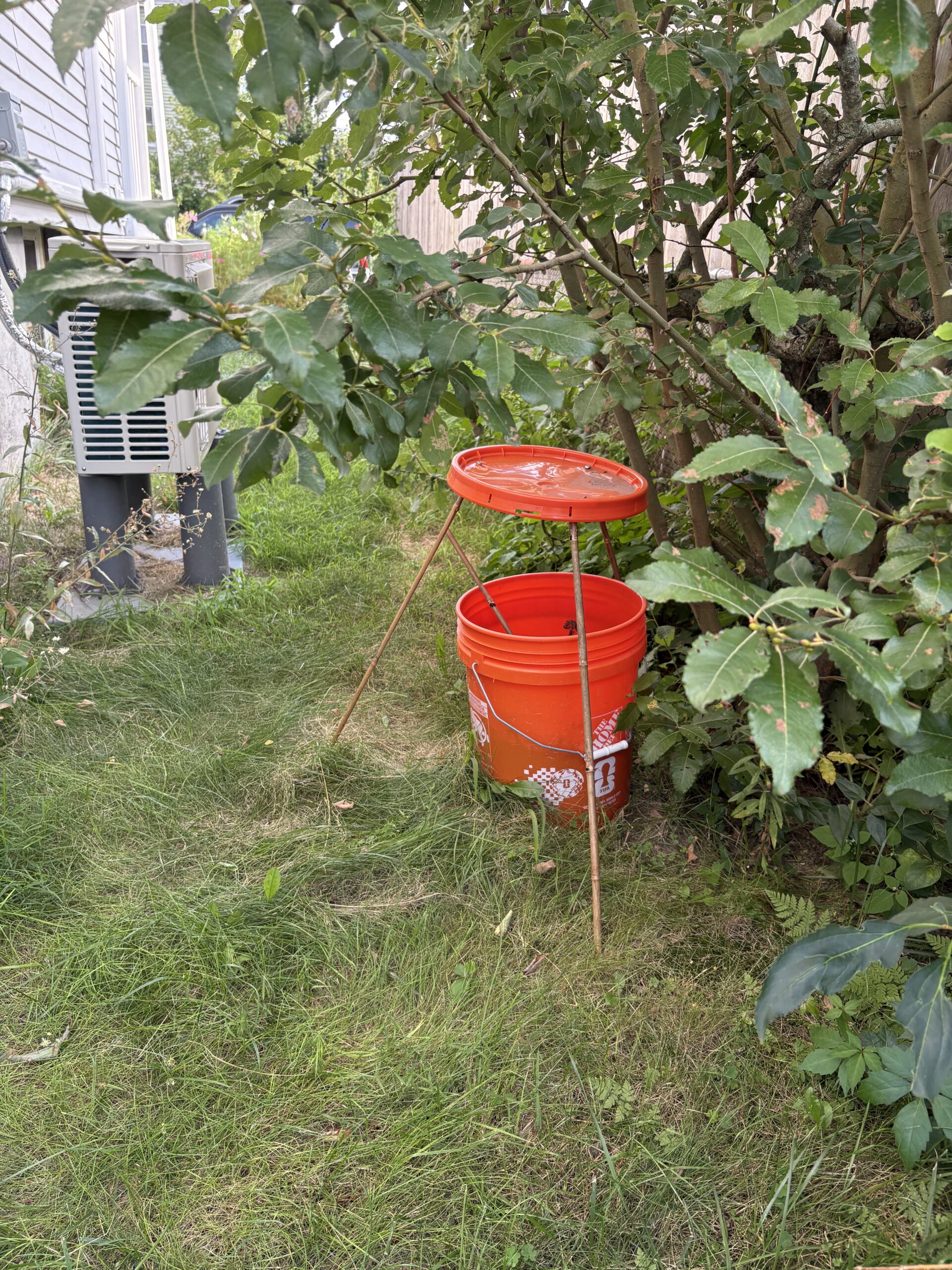
- Homegrown National Park - Great information about ways to get started with native plants. Also, Alex and I highly recommend their mosquito bucket challenge. We did it this year (see photo above) and were amazed by the results… a way to control mosquitos with no harmful chemicals. This was the first summer season we could be in our yard without applying insect repellent.
- Sustainable Plymouth’s fall newsletter - Sustainable Plymouth is your local grassroots ecological action organization, and they are very active and growing! And, you will see in their newsletter, that one of their many actions is helping local folks grow native plants in their yards. How might you, and we as a parish, connect with them and join them in their work? (If two or three of you might want to be parish ambassadors/connectors with Sustainable Plymouth, let me know!)
- Sign up to receive Praying with Creation reflections - These are being emailed daily during the Season of Creation, and include information and prayers in relation to a plant, animal, or other neighbor. Click here to read one of the reflections from this week, about the white oak. These reflections are a ministry collaboration of An Episcopal Path to Creation Justice, The Province One EcoRegion, The Creation Care Ministry Network of ECCT, and The Episcopal Diocese of Western Massachusetts.
9/4/26
Dear Ones of Christ Church,
As we join in the worldwide ecumenical celebration of the Season of Creation, I am giving thanks for the life and witness of Wendell Berry, who died earlier this week, on August 31st. Berry was a Kentuckian farmer, writer, environmentalist, truth-teller, and follower of the way of Jesus.
This weekend in our worship, we will hear the apostle Paul quote one of the two great commandments: “‘Love your neighbor as yourself.’” (Romans 13:8-14)
In his life, Wendell Berry asked again and again, “who is our neighbor?” And he wrote and spoke adamantly that our neighbors are not only humans, but also animals, and insects, and birds, and rocks, and land, and trees, and soil, and rivers. I invite us to read and pray and be convicted by Berry’s own words in the poem below about what it means to be a neighbor, and what it means to hope in such a time as this. I hear in the last two stanzas of the poem another echo from St. Paul that we will hear this weekend: “put on the armor of light.”
Yours in Christ,
Melissa+
A Poem on Hope, by Wendell Berry - Click here to listen to him read this poem.
It is hard to have hope. It is harder as you grow old,
for hope must not depend on feeling good
and there is the dream of loneliness at absolute midnight.
You also have withdrawn belief in the present reality
Of the future, which surely will surprise us,
…And hope is harder when it cannot come by prediction
Any more than by wishing. But stop dithering.
The young ask the old to hope. What will you tell them?
Tell them at least what you say to yourself.
Because we have not made our lives to fit
Our places, the forests are ruined, the fields eroded,
The streams polluted, the mountains overturned. Hope
Then to belong to your place by your own knowledge
Of what it is that no other place is, and by
Your caring for it as you care for no other place, this
Place that you belong to though it is not yours,
For it was from the beginning and will be to the end.
Belong to your place by knowledge of the others who are
Your neighbors in it: the old man, sick and poor,
Who comes like a heron to fish in the creek,
And the fish in the creek, and the heron who manlike
Fishes for the fish in the creek, and the birds who sing
In the trees in the silence of the fisherman
And the heron, and the trees that keep the land
They stand upon as we too must keep it, or die.
This knowledge cannot be taken from you by power
Or by wealth. It will stop your ears to the powerful
when they ask for your faith, and to the wealthy
when they ask for your land and your work.
Answer with knowledge of the others who are here
And how to be here with them. By this knowledge
Make the sense you need to make. By it stand
In the dignity of good sense, whatever may follow.
Speak to your fellow humans as your place
Has taught you to speak, as it has spoken to you.
Speak its dialect as your old compatriots spoke it
Before they had heard a radio. Speak
Publicly what cannot be taught or learned in public.
Listen privately, silently to the voices that rise up
From the pages of books and from your own heart.
Be still and listen to the voices that belong
To the streambanks and the trees and the open fields.
There are songs and sayings that belong to this place,
By which it speaks for itself and no other.
Found your hope, then, on the ground under your feet.
Your hope of Heaven, let it rest on the ground
Underfoot. Be it lighted by the light that falls
Freely upon it after the darkness of the nights
And the darkness of our ignorance and madness.
Let it be lighted also by the light that is within you,
Which is the light of imagination. By it you see
The likeness of people in other places to yourself
In your place. It lights invariably the need for care
Toward other people, other creatures, in other places
As you would ask them for care toward your place and you.
No place at last is better than the world. The world
Is no better than its places. Its places at last
Are no better than their people while their people
Continue in them. When the people make
Dark the light within them, the world darkens.
8/21/26

Dear Ones of Christ Church,
August is a month of transformations and transfigurations. In our Church calendar, the Feast of the Transfiguration is celebrated on August 6th. Three disciples witness Jesus transfigured on the mountain top. And all around us now, transformations abound: ripening tomatoes, cicadas emerging from the ground and shedding their husks to buzz in trees, butterflies and moths emerging from chrysalis and cocoon.
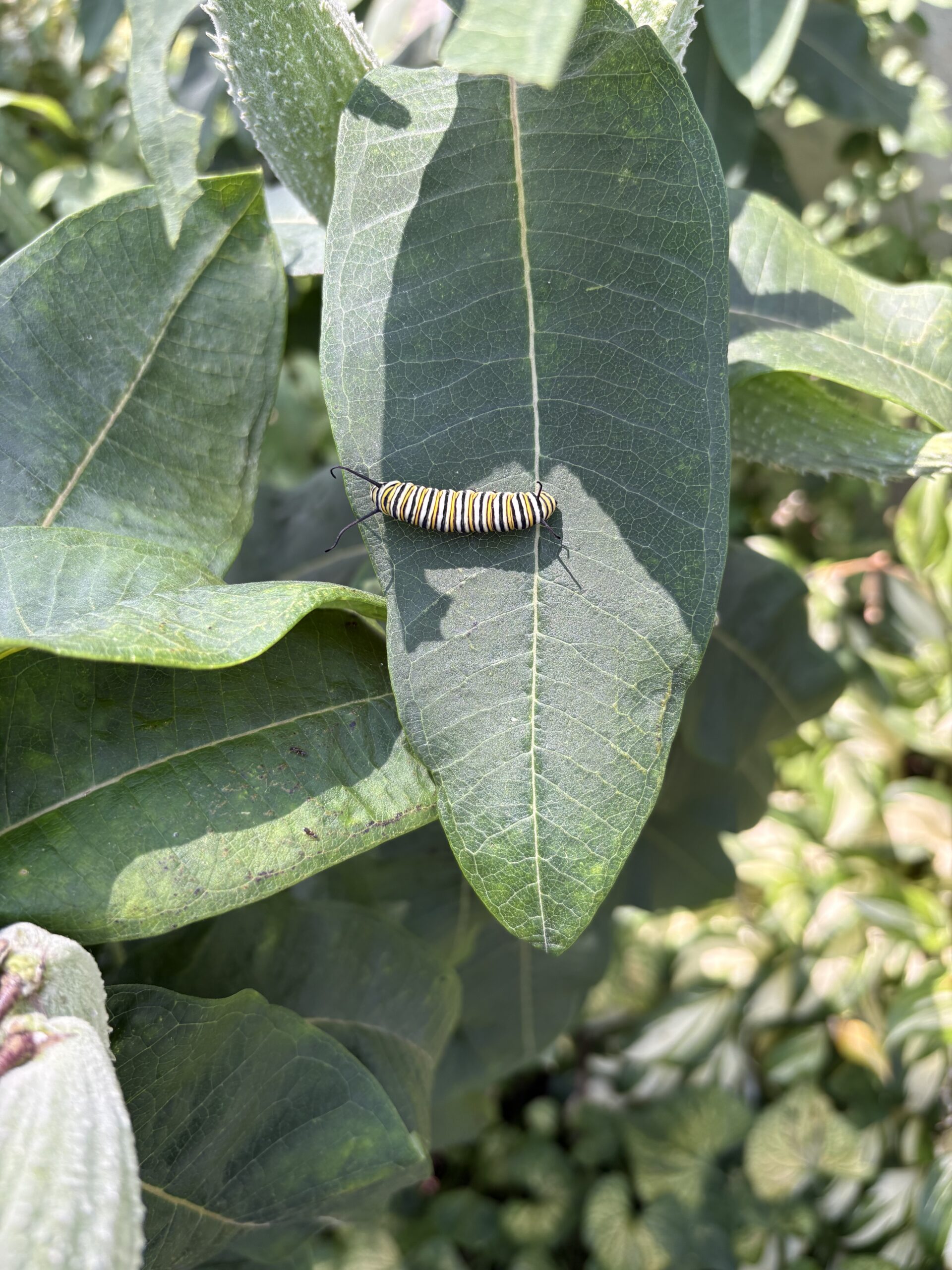
Last week, Alex and I spotted two large monarch caterpillars on the milkweed growing in our driveway garden bed. You can see one of them in the photo above. Two days later, they disappeared, to go off and pupate. We have been looking high and low for a chrysalis or two, but we haven’t been able to find them… this is probably a good thing… I trust that they are hidden safely somewhere in the wild tangle of the garden bed. Wednesday morning as I was leaving the house I saw a monarch butterfly stretching its wings and flying in that same garden bed, which is the other photo above. It is a few days too early for this butterfly to have come from one of those caterpillars… they will likely emerge this weekend at the earliest. But, all the same, a transformative gift!
What transfigurations and transformations are you witnessing and experiencing in this season?
Yours in Christ,
Melissa+
8/7/26
Dear Ones of Christ Church,
We are in the middle of three weekends of listening to the stories of some of Jesus’s miracles as told in Matthew’s gospel. In my Friday reflections for these weeks I will share a poem that invites us to encounter these miracle stories in a new light or with a fresh perspective.
This weekend we will hear Matthew’s story of Jesus walking on water. Below is the poem “Walking Water” by Wyatt Townley.
I invite you to set aside a time of prayer to read the gospel passage, linked here, and to read the poem. You may then want to meditate or journal with one or more of the following questions:
What stands out to you, what word or image or phrase shimmers for you, in the scripture passage? In the poem?
What inspires or excites you in these texts? What challenges you or makes you uncomfortable?
What connections do you hear between the scripture passage, the poem, and your own life with God?
Yours in Christ,
Melissa+
Walking Water by Wyatt Townley
Inside us the ocean
sways like a cradle
in which we rock rock
and are drawn like the tide
to the moon twice a day
we carry our water and it carries us
we are a good pail with legs
foot by foot on the turning
mountain of the world
water walking on the prairie
walking water on the road
up the stairs through a door
where the view rushes out of us
through the window to the woods
rushing water in the desert
rushing water in this chair
and that one you’re in
water walking
and what is solid is not at all
what we thought the rock
worn away by the rocking
Source: Rewriting the Body (Stephen F. Austin Press, 2018).
7/31/26
Dear Ones of Christ Church,
After engaging with Jesus’ parables in the gospel of Matthew the last three weeks, we are now entering three weeks of listening to Matthew’s telling of Jesus’s miracles: multiplying loaves and fishes, walking on water, healing.
In my Friday reflections I will share a poem that invites us into these miracle stories, to hear them perhaps differently, in a new way. This weekend we will hear Matthew’s story of Jesus and the disciples feeding 5,000 people with a few loaves and fish. Below is the poem “Logos” by Mary Oliver.
I invite you to set aside a time of prayer to read the gospel passage, linked here, and to read the poem. You may then want to meditate or journal with one or more of the following questions:
What stands out to you, what word or image or phrase shimmers for you, in the scripture passage? In the poem?
What inspires or excites you in these texts? What challenges you or makes you uncomfortable?
What connections do you hear between the scripture passage, the poem, and your own life with God?
Yours in Christ,
Melissa+
Logos by Mary Oliver
Why worry about the loaves and fishes?
If you say the right words, the wine expands.
If you say them with love
and the felt ferocity of that love
and the felt necessity of that love,
the fish explode into many.
Imagine him, speaking,
and don’t worry about what is reality,
or what is plain, or what is mysterious.
If you were there, it was all those things.
If you can imagine it, it is all those things.
Eat, drink, be happy.
Accept the miracle.
Accept, too, each spoken word
spoken with love.
Source: Devotions (Penguin Press, 2017).
7/24/26

Dear Ones of Christ Church,
This weekend we will hear several of Jesus’s “kingdom of heaven” parables from the gospel of Matthew, including the parable of the mustard seed:
Jesus put before the crowds another parable: “The kingdom of heaven is like a mustard seed that someone took and sowed in his field; it is the smallest of all the seeds, but when it has grown it is the greatest of shrubs and becomes a tree, so that the birds of the air come and make nests in its branches.” (Matthew 13:31-32)
This parable has me thinking of daisy fleabane—the photo above is daisy fleabane growing in one of my garden beds. Many consider this plant a weed, and yet it is an extraordinarily important native plant, an ecosystem unto itself, supporting pollinators and making the soil ready for other native plants. Fleabane is also beautiful—the flowers remind me of little sparks, little stars, of scattered light—some white, some with a purple tinge. They open and close in response to sunlight. You can watch a video here about how marvelous this plant is.
The mustard plant was considered a weed in Jesus’s time, just like fleabane is in our time. What might Jesus mean when he describes the kingdom of heaven as being like a seed that grows up into a weed? How might the parables we will hear this weekend (found here in the Common English Bible translation) be in conversation with the parable of the sower and the parable of the wheat and weeds, which we have listened to the last two weekends? Which parables about the kingdom of heaven in this group speak to you, enliven your curiosity or puzzlement or creativity? Using examples from your own life, how would you finish the sentence, “the kingdom of heaven is like __________?”
Yours in Christ,
Melissa+
7/17/26
Dear Ones of Christ Church,
We are staying with the farming and ecological parables of Jesus in the gospel of Matthew—last weekend we heard the parable of the sower/farmer/seeds/soils, and this weekend we will hear the parable of the weeds and the wheat.
Some of you have sent me photos or spoken with me about your own gardens, and above I have shared an image of a section of one wild garden bed from our own yard: black-eyed susans and mountain mint.
Alex and I have a tool called “Grandpa’s weeder” that we use to go out and pull up dandelions in our yard. I have been thinking about the dandelions, which are cheerful and multiple and abundant—they sow like the sower in last week’s parable, they multiply and feed other insects, they are abundant in ways that match the ways Jesus describes the kingdom of God in the gospels, and yet I consider them weeds.
Some questions I am holding as I go out to weed and dead-head and water and prune:
What do we consider weeds? Why? In what ways is the kingdom of God that Jesus describes in the gospel parables like weeds? In what ways is it like wheat?
What might we learn from both the weeds and the wheat about the kingdom of God and apply it to the gardens of our own lives, as we grow together?
Yours in Christ,
Melissa+
7/3/26
Dear Ones of Christ Church,
As we celebrate Independence Day today and tomorrow, I invite us to pause and join in prayer for and with one another, for this land we inhabit, and for all lands and peoples. As a resource for our prayers, below please find “A Litany for Independence Day Weekend,” written by the Rev. Thomas Blake and shared by the Episcopal Diocese of Connecticut.
Yours in Christ,
Melissa+
A Litany for Independence Day Weekend
God of every nation and people, you made from one blood all the peoples of the earth, and sent your Son to proclaim good news of peace and liberty: Receive now our prayers for this land, and for all the nations of the world.
Lord, hear our prayer.
For the gifts of ordered liberty and common law; for the ancient witness of chartered rights and accountable rulers; for the hope kindled through the inheritance of the English-speaking peoples—through parliament and petition, through the restraint of tyranny, through the long labour toward constitutional government:
We give you thanks, O Lord.
For all in every generation who sought justice and mercy; for those who defended conscience against coercion; for those who taught that rulers stand beneath your judgment and that every person bears your image:
We give you thanks, O Lord.
For the courage of those who declared that all are created equal, and endowed with dignity that no earthly power may rightly erase; for aspirations toward liberty and justice for all; for the freedoms of speech, worship, assembly, and conscience:
We give you thanks, O Lord.
For the peaceful transfer of power, for representative government, for courts that seek justice, for citizens who labour for the common good, for all who have preserved democratic institutions in times of peril:
We give you thanks, O Lord.
For movements that enlarged the promise of liberty—for the abolition of slavery, for the struggle for civil rights,for the extension of voting rights, for the witness of women and men who marched, prayed, preached, organized, and sacrificed so that the nation might more fully reflect your righteousness:
We give you thanks, O Lord.
For those who served among the nations of the world to resist tyranny and cruelty; for cooperation among peoples after times of war; for efforts toward peace, relief, healing, and shared human dignity; for all who labour internationally for health, justice, and the protection of life:
We give you thanks, O Lord.
For scientists and teachers, labourers and artists, farmers and builders, immigrants and refugees, for Indigenous wisdom and endurance, for the varied peoples who together form this nation:
We give you thanks, O Lord.
Yet, O God, before the brightness of your holiness, we confess the shadows of our history and our present.
Have mercy upon us and forgive us, O Lord.
For the violent seizure of lands, for broken treaties and contempt toward Indigenous peoples; for cultures dishonoured, communities destroyed, and children taken from their families:
Have mercy upon us and forgive us, O Lord.
For slavery and the buying and selling of human lives; for racism enshrined in law and custom; for lynching, segregation, exclusion, and inequity; for the persistence of prejudice in our hearts and systems:
Have mercy upon us and forgive us, O Lord.
For wealth pursued without compassion, for freedoms denied to the poor, for indifference to the suffering of strangers, for violence in our streets and cruelty in our speech:
Have mercy upon us and forgive us, O Lord.
For times when this nation has acted arrogantly among the nations; for interventions marked more by domination than justice; for policies that sowed fear, exploitation, or resentment; for every betrayal of the dignity of other peoples and cultures:
Have mercy upon us and forgive us, O Lord.
For the worship of power, for nationalism that forgets our neighbours, for cynicism and falsehood, for despair of the common good, and for every refusal to seek reconciliation and truth:
Have mercy upon us and forgive us, O Lord.
Teach us to cherish our country without making it an idol. Give us gratitude without triumphalism, patriotism without bitterness, and repentance without despair.
Renew us in righteousness and peace.
Make us a people who welcome the stranger, defend the vulnerable, speak truth with humility, and strive for justice with perseverance.
Renew us in righteousness and peace.
Grant that the liberty we celebrate may be joined to responsibility, the rights we claim to compassion, and the power we possess to service.
Renew us in righteousness and peace.
Inspire the Church in this land to be not the servant of any earthly power, but a faithful witness to the kingdom of Christ: proclaiming mercy, defending dignity, and calling all people to repentance and hope.
Renew us in righteousness and peace.
O God, whose blessed Son was called the Prince of Peace: Grant that all the peoples of the earth, divided and enslaved by sin, may be freed and brought together under his gracious rule; who lives and reigns with you and the Holy Spirit, one God, now and for ever.
Amen.
Source: The Rev. Thomas Blake, shared on the website of the Episcopal Church in Connecticut
6/26/26
Dear Ones of Christ Church,
Summer blessings to you! It was a gift to be away for some time of rest and travel, and it is a gift to return home and to be with you all. One of the things Alex and I love to do when we travel is to visit museums, and one of our stops on our road trip was the Clark Art Institute in the Berkshires. One of my favorite things about the Clark is that they also use their outdoor space of ~ 2 miles of wooded trails and pasture as a gallery. The current outdoor exhibit is called Ground/work 2025. Artists from around the world work with the landscape to co-create sculptures of change, that visitors can encounter as they walk along the trails. All of the works are striking. I was particularly moved by Laura Ellen Bacon’s work Gathering my Thoughts, an in-place weaving together of willow branches into a sculpture that is also a habitat and shelter for other creatures and, in the artist’s words, “would grow together and grow into the place and grow from the place and within the place.” The sculpture reminded me of a nest and all of the birds that are currently nesting, and it also reminded me of God who weaves and knits us and all things in and into Creation, as in Psalm 139.
How do you see, or long to see, God’s weaving at work around you? How might we pray and act for God to weave us into good habitat and shelter for Christ, and for our human, animal, and plant neighbors?
In these early summer days, may we remember, praise, and draw near to God, who has woven us and is weaving us together with one another in the Body of Christ and in Creation.
Yours in Christ,
Melissa+
6/5/26
Dear Ones of Christ Church,
A note that beginning this Sunday afternoon, June 7th, Alex and I will be heading out for a few weeks of vacation, rest and re-creation. I will return on Wednesday, June 24th. It feels like a particular blessing to be able to move into a time of rest as we enter the long green season after Pentecost, also known as Ordinary Time. This is the time in the Church calendar that matches our own time, the time we live in—the Holy Spirit has arrived and is always arriving, inviting and compelling us to enter more deeply into relationship with God, with one another, and with God’s creation. In the northern hemisphere, the beginning of the season of Ordinary Time corresponds with our greening, growing season of late spring and early summer. This green season is a wonderful time to ask: How is the Holy Spirit moving in our lives and in our church? How will we respond? What is God growing and greening in our communities and relationships, and how are we called to participate in what God is doing?
We will hear an example of response to holy change in our Gospel reading this weekend:
“As Jesus continued on from there, he saw a man named Matthew sitting at a kiosk for collecting taxes. He said to him, ‘Follow me,’ and he got up and followed him.” (Matthew 9:9)
In this life-changing moment, Matthew leaves his old life behind and follows Jesus into a new life, a new way of being. He doesn’t know what that new life will be. Jesus makes him no promises, only calls him to follow. Matthew hears, trusts, gets up, and follows, to travel a new road with Christ.
I pray that we each find space, in this green, growing season, amid the joys and sorrows of our lives, to pay attention to the ways the Holy Spirit is moving, the ways that Jesus is calling us into new ways of being, and then to have the courage to follow.
Yours in Christ,
Melissa+